
The CDN ecosystem is at a critical inflection point, experiencing two simultaneous and disruptive forces. The recent exits of major players like StackPath, Edgio, and Lumen CDN have reshaped the competitive landscape, shifting hundreds of millions of dollars in annual recurring revenue and driving consolidation in the enterprise segment. However, this shift is overshadowed by a more profound transformation: the convergence of CDN technology with the rapidly evolving field of Agent AI.
This convergence presents both immense opportunity and existential risk. Companies without a robust AI strategy risk being left behind as industry titans – Google, Microsoft, AWS, Meta, Salesforce, OpenAI, and others – pour billions into developing and deploying Agentic AI. Even chipmakers like SambaNova are integrating AI capabilities directly into their cloud offerings, underscoring the pervasive nature of this technological disruption. Vendors that fail to adapt will face a steep uphill battle for survival in this rapidly evolving landscape.
Innovators
Industries are beginning to embrace the transformative potential of Agentic AI technologies, with platforms like AutoGen, LangChain, CrewAI, LlamaIndex, Meta, and OpenAI leading the charge. While still in its infancy, the rapid pace of innovation in AI is accelerating its adoption and shaping its impact across sectors.
Agentic AI refers to systems that operate autonomously by perceiving their environment through sensors or data inputs, evaluating options to make decisions, and executing tasks to achieve specific goals. These systems go beyond simple automation by demonstrating adaptability—learning from experiences and responding to changes in their surroundings to refine their behavior over time.
Currently, Agentic AI operates in a semi-autonomous state, often requiring human oversight and intervention for many tasks. Experts predict it may take three to ten years for these systems to achieve full autonomy, depending on technological breakthroughs and the evolution of regulatory frameworks.
At the core of Agentic AI lies Agent AI—a network of specialized agents designed to manage specific tasks by interacting with data sources and knowledge bases. These agents collaborate to identify sources of truth, process information, and make autonomous decisions. By reasoning and adapting to dynamic contexts, Agent AI is revolutionizing complex decision-making and redefining how industries think and act.
Agent AI CDN
The emergence of the Agentic AI CDN business model could represent a transformative milestone for the content delivery industry in 2025. An Agentic CDN, fully powered by AI agent technology, has the potential to replace many of the manual processes currently dominating the field—such as creating, testing, and validating caching rules, WAF (Web Application Firewall) policies, networking configurations, and managing an array of other services. Instead, these tasks would be seamlessly automated by a sophisticated software stack driven by AI agents, each specialized in executing specific responsibilities with precision and efficiency.
These agents would work collaboratively, auditing each other’s outputs, providing feedback, and analyzing how changes affect performance and security. The system would operate autonomously, iterating and optimizing without human intervention, continuously improving content delivery efficiency and reliability.
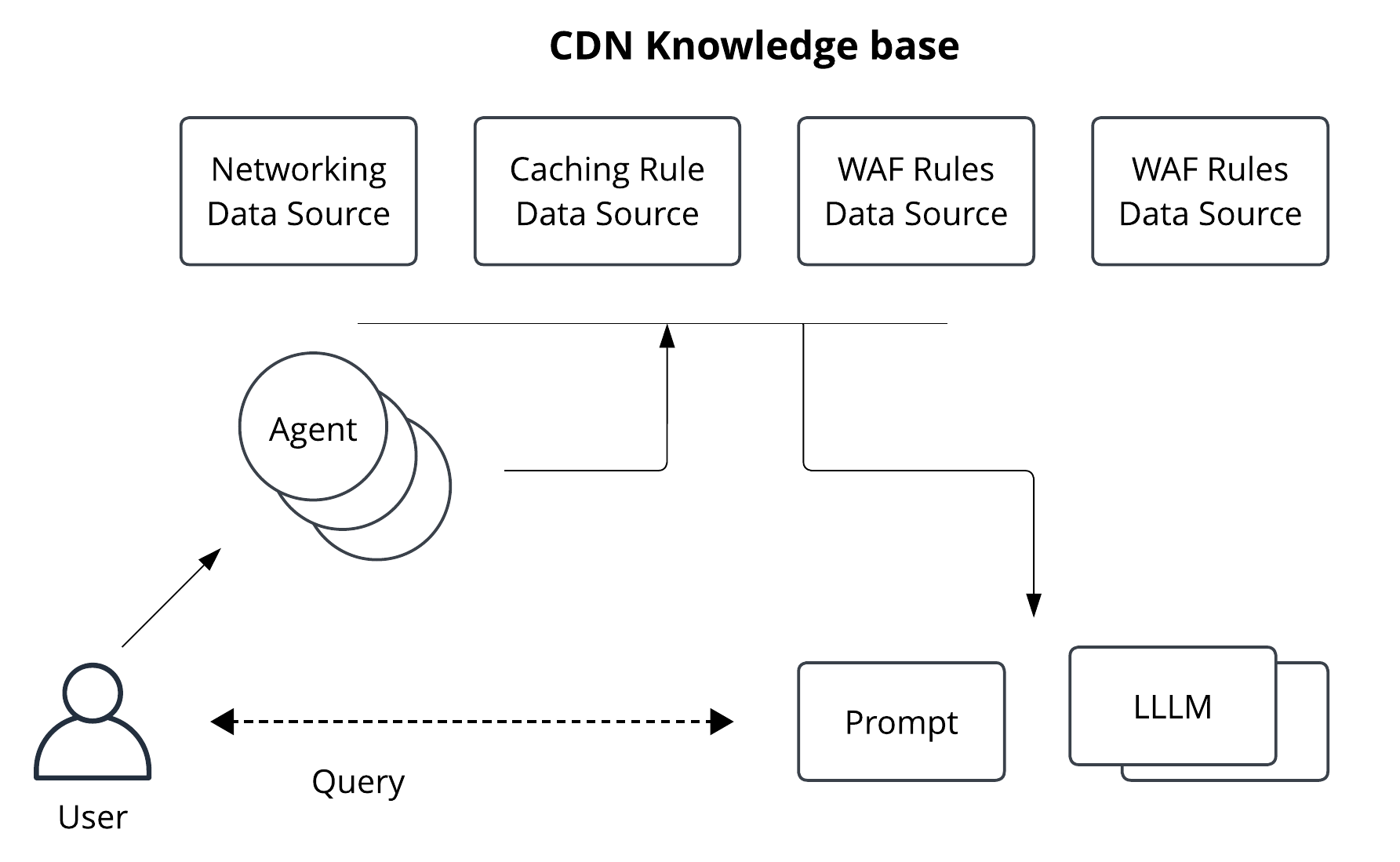
But what would the technology stack of an Agentic CDN look like? At a minimum, it might require:
- A Global Container Platform: This would serve as the backbone for housing agents, enabling them to operate at scale across a distributed network. The platform must support rapid deployment and secure communication between agents.
- Vector Databases: Essential for storing multimodal data types like images, text, and metadata, vector databases allow agents to access, query, and process information in real-time, supporting intelligent decision-making and pattern recognition.
- AI-Orchestrated Feedback Loops: These systems would monitor agent outputs, evaluate their impact on key metrics such as latency, throughput, and security, and feed this information back into the decision-making process.
- Integration with Networking and Security Protocols: Agents would need direct access to CDN-specific components such as DNS, load balancers, and firewalls to autonomously implement and adjust policies.
- Advanced Observability and Monitoring Tools: These would provide agents with real-time insights into network performance and anomaly detection, ensuring rapid response to emerging issues.
While the Agentic AI CDN remains an idea, its potential is vast. By eliminating human error, accelerating optimization cycles, and leveraging AI’s ability to process complex datasets, the Agentic CDN could redefine how content is delivered and secured. As the technology matures, this autonomous, self-improving model could become the new standard, driving unprecedented efficiency and innovation in the CDN industry.
Conclusion
The convergence of CDN technology and Agent AI represents a monumental shift for the industry. While the departure of key players signals challenges, it also opens doors for innovation, particularly in the realm of autonomous systems like the Agentic AI CDN. These systems promise to revolutionize how content is delivered, optimized, and secured, moving beyond traditional models to embrace adaptability and self-governance.
However, the road ahead is not without hurdles. Achieving full autonomy in Agentic AI systems will require breakthroughs in technology, regulatory clarity, and widespread industry adoption. For vendors, the message is clear: adapt or risk obsolescence. Those who invest in developing robust AI strategies today will be well-positioned to lead the next chapter of the CDN industry, shaping its future in ways we are only beginning to imagine.